
Iron infusion
For confirmed iron deficiency
Iron is essential for the production of haemoglobin and the transport of oxygen. Depleted iron stores can cause symptoms. An iron infusion may be considered when iron deficiency has been confirmed and oral iron supplements are not tolerated or do not work well enough.
Possible symptoms of iron deficiency
- Fatigue and weakness
- Shortness of breath, especially during exertion
- Pale skin
- Hair loss
- Cold hands and feet
- Restless legs syndrome
These symptoms can have other causes. Blood tests can show whether iron deficiency is present.
When might an iron infusion be appropriate?
A ferritin level below 30 µg/L generally indicates substantially depleted iron stores. An infusion may be appropriate if oral iron supplements are not tolerated or ferritin has not risen sufficiently after approximately two months of treatment.
People at increased risk of iron deficiency include:
- Women with heavy or frequent menstrual bleeding
- People who cannot absorb enough iron through the gut
- Athletes with increased iron requirements
- People following a vegetarian or vegan diet
- People whose ferritin level has not risen after two months of oral iron supplements
Men can also develop iron deficiency. We determine whether an infusion is appropriate based on your blood results and individual circumstances.
What is an iron infusion?
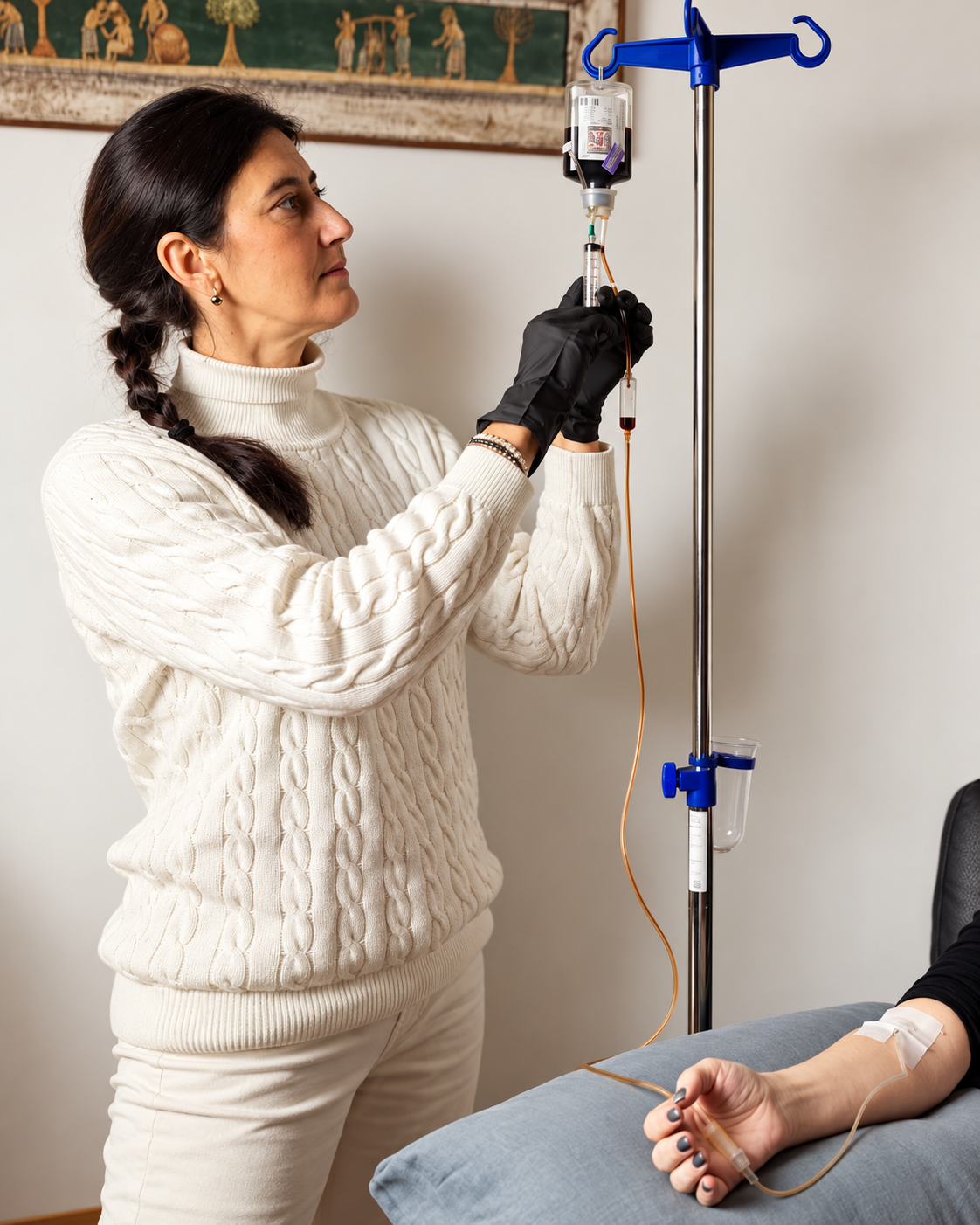
During an iron infusion, iron enters the bloodstream directly through a vein, without relying on absorption through the gut. An infusion can replenish iron stores faster than oral iron supplements.
Which blood tests are needed?
- Complete blood count
- Ferritin
- Transferrin saturation
- CRP (a marker of inflammation)
You can have these tests done by your GP before your appointment.
What happens during an iron infusion?
Before treatment, I review your symptoms, laboratory results and any possible contraindications.
The infusion takes place at my practice in Hofheim am Taunus and lasts approximately 40–60 minutes. I recommend checking your blood results six weeks after completing treatment.
Fees
€140 per infusion
Private health insurance: The cost is generally covered. Please check reimbursement with your insurer in advance.
Statutory health insurance: This treatment is self funded.
Frequently asked questions about iron infusions
What side effects can an iron infusion cause?
Possible side effects include headache or discomfort at the injection site. Severe hypersensitivity reactions are rare. For this reason, the infusion is administered slowly under medical supervision.
Can I have an iron infusion during pregnancy?
Iron requirements increase during pregnancy to support blood production and the baby’s development. If iron deficiency is confirmed, an infusion may be given in the second or third trimester.
How many infusions will I need?
This depends on your blood results and iron requirements. After reviewing your results, we will discuss how many infusions may be appropriate.
When will my blood results be checked again?
I recommend a follow-up blood test around six weeks after completing treatment.
Can I book an appointment if I do not have recent blood test results?
Please contact me before booking. Blood testing is also available at my practice; the assessment costs €80, including laboratory fees.
